
The American Southwest Has a Cryptid Problem
The Land Itself Is Different
Drive across New Mexico at night. Really drive it, not the interstate, but the two-lane highways that cut through the mesas and arroyos between towns that barely exist. Watch the sky do things you've never seen a sky do. Watch the shadows move wrong in the headlights.
The American Southwest is not like other regions. It is ancient in a way that the rest of the country is not. The geological formations are hundreds of millions of years old. The Indigenous cultures that call this land home have oral traditions stretching back thousands of years. The U.S. military has been testing things here since the 1940s that it still won't talk about.
All of this produces a cryptid landscape that is fundamentally different from the forests of the Pacific Northwest or the swamps of the Deep South. The Southwest doesn't give you a large primate hiding in the trees. It gives you things that are harder to categorize. Harder to explain. And harder to forget.
The Creatures
### Skinwalker
The Skinwalker comes from Navajo tradition, and it demands respect in how it's discussed. In Navajo culture, the yee naaldlooshii is not a campfire story. It is a real and dangerous concept tied to witchcraft and the violation of cultural laws. Many Navajo people will not say the word aloud.
What outsiders call a skinwalker is typically described as a person who has gained the ability to transform into an animal, most often a coyote, wolf, owl, or crow. Reports describe unnervingly fast movement, eyes that reflect light wrong, and animals that behave with human intelligence. Sightings concentrate on the Navajo Nation, which spans portions of Arizona, New Mexico, and Utah.
This is not a creature that was invented for television. This tradition predates European contact by centuries. The fact that modern witnesses, including non-Native witnesses with no knowledge of Navajo tradition, report encounters that align with the oldest descriptions is one of the most compelling patterns in American cryptozoology.
### Thunderbird
The Thunderbird appears across multiple Indigenous traditions, from the Navajo to the Lakota to the Kwakiutl. In the Southwest, sightings of enormous birds with wingspans of 15 to 30 feet concentrate in Arizona and western Texas.
The most famous modern report comes from 1890, when the Tombstone Epitaph allegedly published a story about ranchers killing a massive winged creature in the Arizona desert. The article has never been conclusively located in the paper's archives, but the story persists. More recent witnesses describe dark, pterodactyl-like shapes gliding over desert terrain, often at dusk.
Some researchers point to the Argentavis, a prehistoric bird with a 23-foot wingspan that went extinct roughly six million years ago. Others suggest misidentified condors or sandhill cranes. But condors don't have 20-foot wingspans. And sandhill cranes don't make experienced outdoorsmen pull off the highway to stare.
### Chupacabra
The Chupacabra originated in Puerto Rico in the 1990s, but it found a second home in the Southwest. Texas produces more chupacabra reports than any other state, with sightings concentrated in the Rio Grande Valley and the dry brush country south of San Antonio.
The Southwest chupacabra looks different from the Puerto Rican original. The Caribbean version was described as bipedal, spined, and almost alien. The Texas version is typically a quadrupedal, hairless canine with blue-gray skin and pronounced fangs. Veterinarians have identified many Texas specimens as coyotes or dogs with severe mange. But not all of them fit neatly into that box, and the livestock kills that accompany the sightings follow a pattern that mange-ridden coyotes don't typically produce.
### Dogman
The Dogman is reported across the Southwest, though it gets less attention here than in Michigan or Wisconsin. Witnesses describe an upright canine, 6 to 7 feet tall, moving on two legs with unsettling fluidity. Reports cluster near canyon systems and river corridors in New Mexico and Arizona.
Some researchers believe Southwest dogman reports overlap with skinwalker accounts, and the line between the two is genuinely blurry. The behavioral descriptions differ, though. Skinwalker encounters carry a sense of malice and intelligence. Dogman encounters feel more like stumbling onto a large predator that doesn't want to be seen.
Skinwalker Ranch
No discussion of Southwest strangeness is complete without the ranch. Located in the Uintah Basin of Utah, the property now known as Skinwalker Ranch has been a hotspot for reported anomalies since at least the 1950s.
Before it became a TV show, the ranch was studied by the National Institute for Discovery Science, a private research organization funded by Robert Bigelow. The documented incidents include cattle mutilations with surgical precision, unidentified aerial objects, electromagnetic anomalies that disabled equipment, and large predatory animals that left no tracks and could not be harmed by gunfire.
The Ute people have long considered the basin a place of dark power. They warned settlers about it generations ago. The Utes attribute much of the activity to the skinwalker tradition, which is shared across multiple Southwestern tribal nations, not just the Navajo.
The Indigenous Context
This matters more than most articles acknowledge. The Southwest contains some of the most intact Indigenous oral traditions in North America. The Navajo Nation is the largest reservation in the country. The Hopi, Zuni, Apache, and Ute nations all maintain living cultural practices that include accounts of beings and phenomena that Western science has no framework for.
These are not extinct traditions being reconstructed from fragments. They are active, practiced, and taken seriously by the communities that hold them. When a Navajo elder describes a skinwalker, that description carries the weight of a tradition that has been consistent for longer than English has existed as a language.
Western cryptozoology sometimes treats Indigenous accounts as quaint folklore. That is a mistake. These traditions represent the longest continuous observation of the landscape that exists. If something unusual lives in the Southwest, Indigenous communities have known about it the longest.
The Military Wildcard
The Southwest is home to White Sands Missile Range, Los Alamos National Laboratory, Kirtland Air Force Base, Nellis Air Force Base, the Nevada Test Site, and Area 51. The region has more restricted airspace than anywhere else in the country.
Some of the aerial phenomena reported across New Mexico and Nevada are almost certainly classified aircraft. The U-2, SR-71, F-117, and B-2 were all tested in this region years before the public knew they existed. It is reasonable to assume that experimental aircraft are still being tested here today.
But that doesn't explain the ground-level encounters. It doesn't explain the livestock predation. It doesn't explain the traditions that predate the military by a thousand years. The military presence may account for some of the aerial strangeness, but it becomes a convenient explanation that gets stretched too thin when applied to everything.
Why the Southwest Is Different
The Pacific Northwest produces large primates in deep forest. The South produces swamp creatures and hairy hominids. The Southwest produces shapeshifters, enormous raptors, livestock predators, and things that resist categorization entirely.
The landscape drives this. There are no dense canopies to hide behind in the desert. Whatever lives here survives in the open, or it moves between states of visibility in ways that don't follow normal rules. The dryness preserves tracks, yet many of these encounters leave none.
The Southwest doesn't produce Bigfoot. It produces something stranger. And the land, vast, ancient, and largely empty, seems to invite it.
Explore by state: New Mexico cryptids, Arizona cryptids, Utah cryptids, Nevada cryptids, Texas cryptids.
Related creatures: Skinwalker, Chupacabra, Thunderbird, Dogman, Goatman.
Creatures mentioned in this post
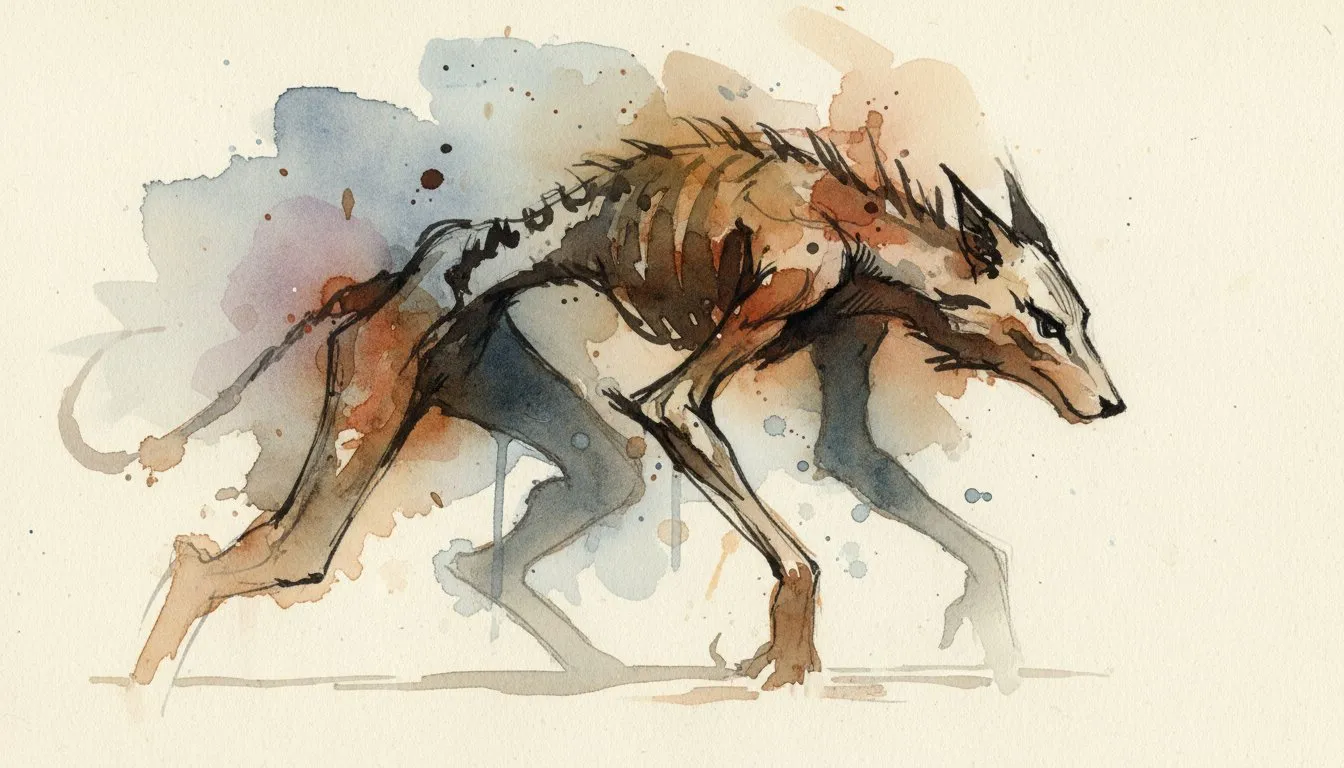
Skinwalker
A Navajo witch who wears the skins of animals and walks between worlds.
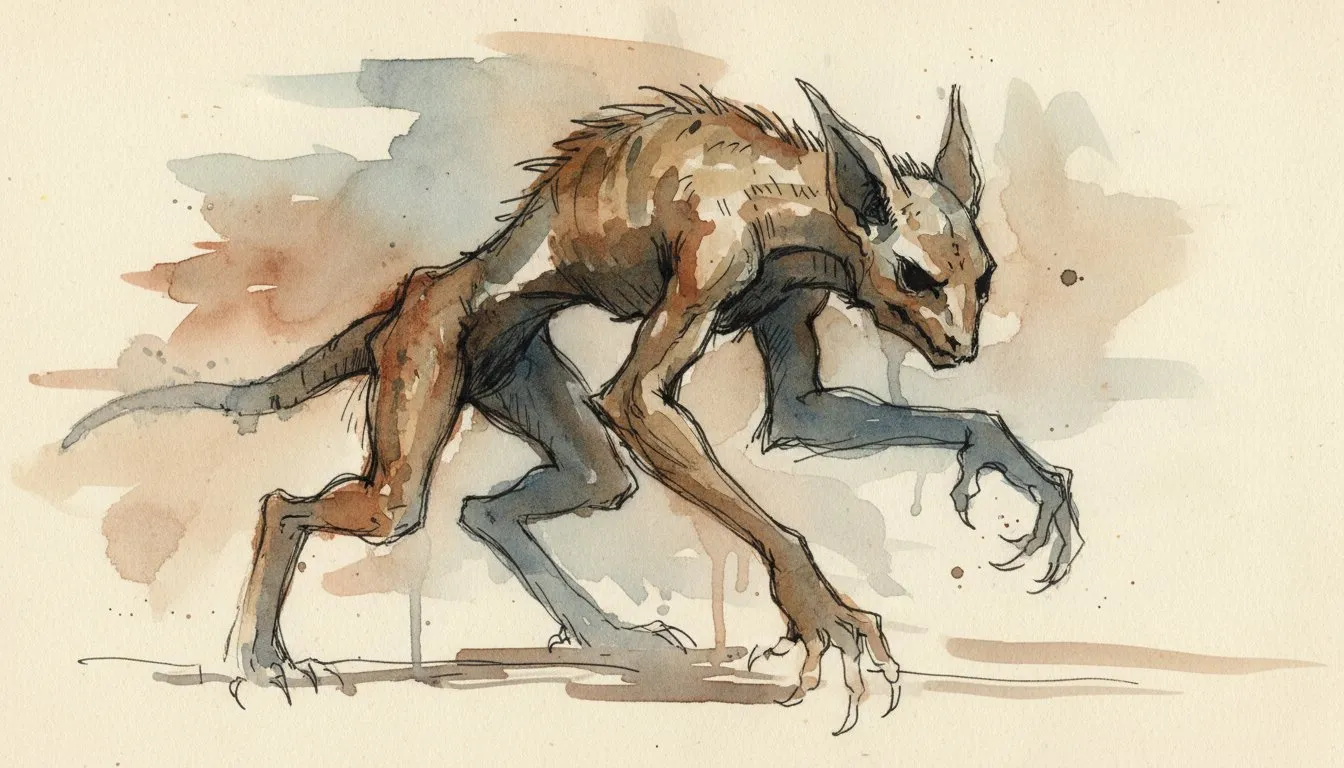
Chupacabra
The blood-draining predator that left livestock drained across Latin America.
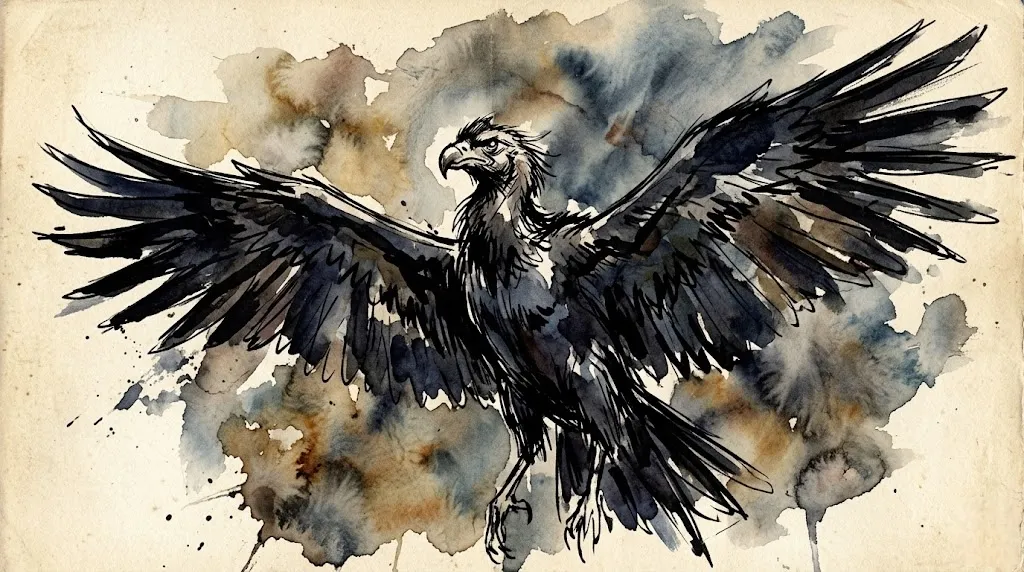
Thunderbird
A colossal bird from indigenous legend with a wingspan that blots out the sun.
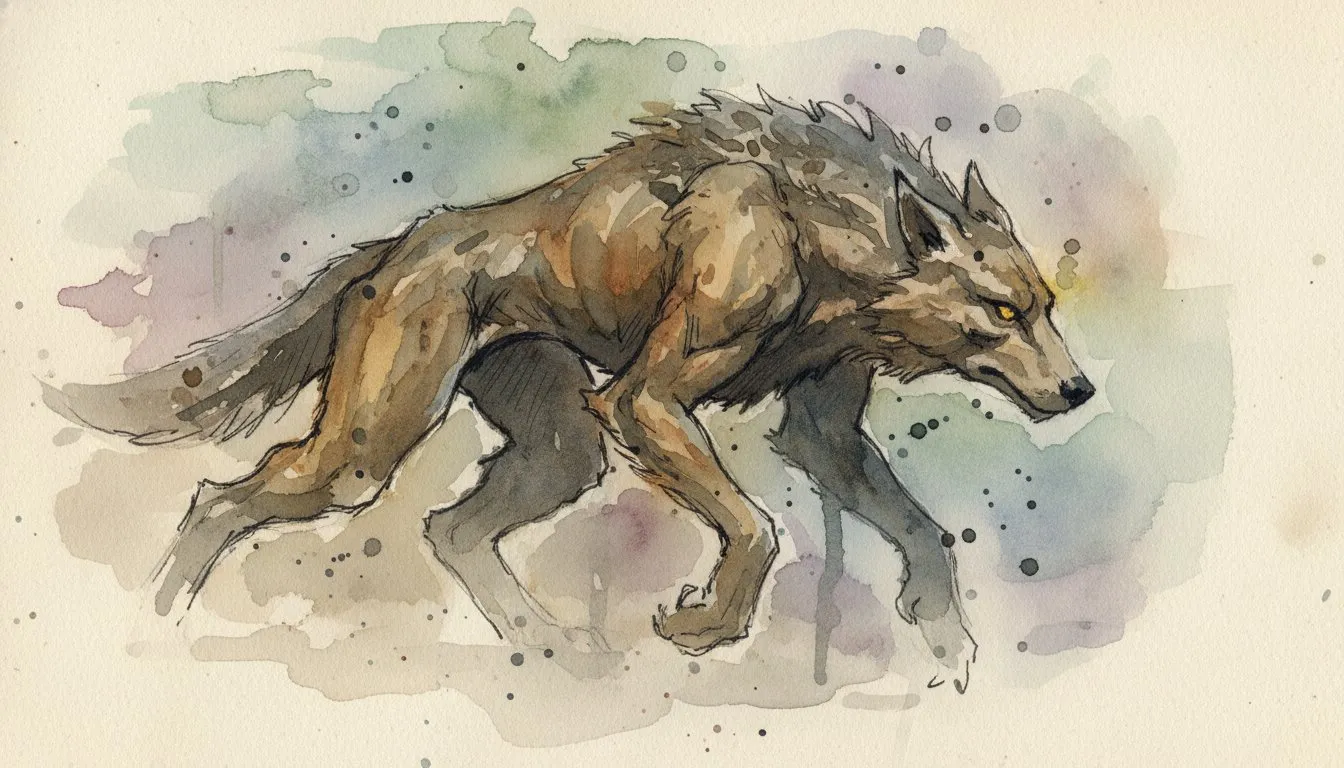
Michigan Dogman
An upright canine terror first reported in 1887, stalking Michigan's north woods ever since.