
The Most Credible Cryptid Sightings in History
What Makes a Sighting Credible?
Most cryptid encounters are easy to dismiss. One witness, bad lighting, no evidence. But a small number of cases break that pattern. They involve multiple witnesses who don't know each other. Trained observers like military officers or naturalists. Physical evidence examined by professionals. Official investigations that end without clear explanations.
These aren't proof. But they're the sightings that make even cautious researchers pause. Here are seven of the most credible cryptid encounters on record, ranked by the strength of their evidence.
### 1. The Patterson-Gimlin Film (1967)
On October 20, 1967, Roger Patterson and Bob Gimlin captured 59.5 seconds of 16mm film showing a large, bipedal figure walking along Bluff Creek in Northern California. The figure, now known as "Patty," turns and looks directly at the camera before continuing into the tree line.
What makes it credible: In nearly 60 years, no one has produced a definitive debunking. Multiple biomechanics experts, including Dr. Jeff Meldrum at Idaho State University, have noted that the figure's gait, muscle movement, and proportions are difficult to replicate in a costume. The compliant gait pattern, where the knee remains bent throughout the stride, differs from how humans walk. Costume technology in 1967 was nowhere near capable of simulating visible muscle flexion beneath fur.
What remains unexplained: Patterson was actively looking for Bigfoot when he found it. That's either incredible luck or suspicious convenience. No body, no bones, no definitive DNA has followed in the decades since. The film is extraordinary. The follow-up evidence is not.
### 2. The Point Pleasant Mothman Encounters (1966-67)
Over 13 months, more than 100 residents of Point Pleasant, West Virginia reported encounters with a large gray or brown creature with glowing red eyes and a wingspan of 10 to 15 feet. The first report came from two couples driving near an abandoned munitions plant. Sightings continued through December 1967, when the Silver Bridge collapsed, killing 46 people. After that, the reports stopped.
What makes it credible: The sheer volume of independent witnesses. These weren't cryptid enthusiasts. They were families, couples, and night-shift workers who had no reason to fabricate stories. Several witnesses reported the creature to the Mason County Sheriff's office. The consistency of descriptions across more than a hundred reports is striking.
What remains unexplained: No physical evidence was ever recovered. Some researchers suggest the witnesses saw a large barred owl or sandhill crane, but those explanations struggle to account for the reported size and behavior. The connection to the bridge collapse remains one of cryptozoology's most eerie coincidences. Read the full profile of Mothman.
### 3. The Sandra Mansi Photograph (1977)
In July 1977, Sandra Mansi photographed what appears to be a large animal with a long neck and humped back surfacing in Lake Champlain, Vermont. She sat on the photo for three years before sharing it. When she did, it became the most studied piece of lake monster evidence in North America.
What makes it credible: Dr. B. Roy Frieden, an optical physicist at the University of Arizona, analyzed the original photograph and concluded it had not been tampered with. The image shows no signs of double exposure, superimposition, or manipulation. Mansi had no history of hoaxing and gained no significant financial benefit from the photo. She actually lost the original negative during a move, which cuts against the theory that she was building a hoax for profit.
What remains unexplained: Without the negative, full forensic analysis is impossible. The object in the photo could be a large log, a wave formation, or a swimming animal seen at a misleading angle. Champ sightings in Lake Champlain date back to Indigenous Abenaki oral traditions, but the lake has been sonar-surveyed multiple times without conclusive results.
### 4. HMS Daedalus Sea Serpent (1848)
On August 6, 1848, officers aboard HMS Daedalus, a Royal Navy corvette, observed a large serpentine creature in the South Atlantic between the Cape of Good Hope and St. Helena. Captain Peter M'Quhae submitted an official report to the Admiralty, and multiple officers independently confirmed the sighting.
What makes it credible: These were British Royal Navy officers making an official report to their commanding authority. Fabricating such a report would have been a career-ending offense. Captain M'Quhae described a creature approximately 60 feet long with a head held about four feet above the water. The officers observed it for approximately 20 minutes at close range.
What remains unexplained: Skeptic Richard Owen, the prominent Victorian naturalist, suggested the officers saw a large seal or sea elephant. M'Quhae publicly rejected that explanation, noting the crew was well familiar with marine mammals. No photograph exists, and the South Atlantic has not produced similar reports from military vessels since.
### 5. Orang Pendek Investigations (1920s-Present)
The Orang Pendek, a small bipedal primate reported from the forests of Sumatra, has been described by British colonial officials, Dutch settlers, and Indonesian villagers for over a century. In the early 2000s, British researchers Debbie Martyr and Jeremy Holden spent years in Kerinci Seblat National Park investigating the creature. Both reported personal sightings.
What makes it credible: Footprint casts collected by researchers show a foot structure distinct from any known primate in the region. The prints display a divergent big toe consistent with an upright-walking ape, not a human or orangutan. Martyr, a journalist who went to Sumatra as a skeptic, became convinced after her own encounter. Hair samples collected from the region have been analyzed but not matched to any known species.
What remains unexplained: Despite decades of investigation, no specimen has been captured or photographed clearly. Sumatra's dense jungle makes systematic survey work extremely difficult. The creature's reported size, about 2.5 to 5 feet tall, would make it easy to miss in dense canopy forest.
### 6. Ogopogo of Lake Okanagan
The Ogopogo of Lake Okanagan in British Columbia is backed by something most cryptids lack: a cultural record that predates European contact by centuries. The Syilx people of the Okanagan Nation have oral traditions describing N'ha-a-itk, a dangerous serpentine creature in the lake. European settlers began reporting sightings in the 1870s. Dozens of reports have accumulated since.
What makes it credible: Indigenous oral records spanning hundreds of years describe a creature consistent with later European accounts. In 1926, thirty carloads of people on the opposite shore reportedly watched a large creature moving through the water. Multiple film and video recordings exist, though none are definitive. The lake is over 100 miles long and reaches depths exceeding 750 feet, large enough to support an unknown population.
What remains unexplained: Despite extensive fishing and recreational use of the lake, no physical remains have been found. Sonar surveys have produced some anomalous readings but nothing conclusive. The long, narrow, deep lake makes comprehensive underwater survey work impractical.
### 7. Morgawr of Falmouth Bay (1976)
In 1976, multiple witnesses around Falmouth Bay in Cornwall, England reported a large, long-necked creature in the water. Two photographs were sent to the Falmouth Packet newspaper by a woman identifying herself only as "Mary F." That same year, professional photographer Tony "Doc" Shiels claimed to have photographed the creature, which locals call Morgawr, Cornish for "sea giant."
What makes it credible: The sightings came from multiple independent witnesses over several months. Some observers were fishermen with decades of experience on those waters. The Falmouth Bay area has a history of unusual marine sightings dating back to the 1800s. Cornwall's coastline drops to significant depth close to shore, providing habitat for large marine animals.
What remains unexplained: Shiels was a known showman and magician, which casts doubt on his specific photos. The "Mary F." photographs remain unverified because the photographer never came forward publicly. Without the original negatives or the photographer's identity, the images can't be fully authenticated.
What This Tells Us
Seven cases. Military officers, university scientists, indigenous oral traditions spanning centuries, and over a hundred independent witnesses in a single town. None of this constitutes proof. But dismissing all of it requires you to believe that trained observers consistently misidentify known animals, that indigenous cultures across continents invented strikingly similar creatures independently, and that hundreds of unrelated witnesses chose to fabricate the same story.
The honest position is that some of these cases are genuinely difficult to explain. That doesn't mean the creatures are real. It means the question is still open.
And sometimes, that's the most unsettling answer of all.
Explore more: Loch Ness Monster, Cadborosaurus, Gloucester Sea Serpent, Yeti.
Creatures mentioned in this post
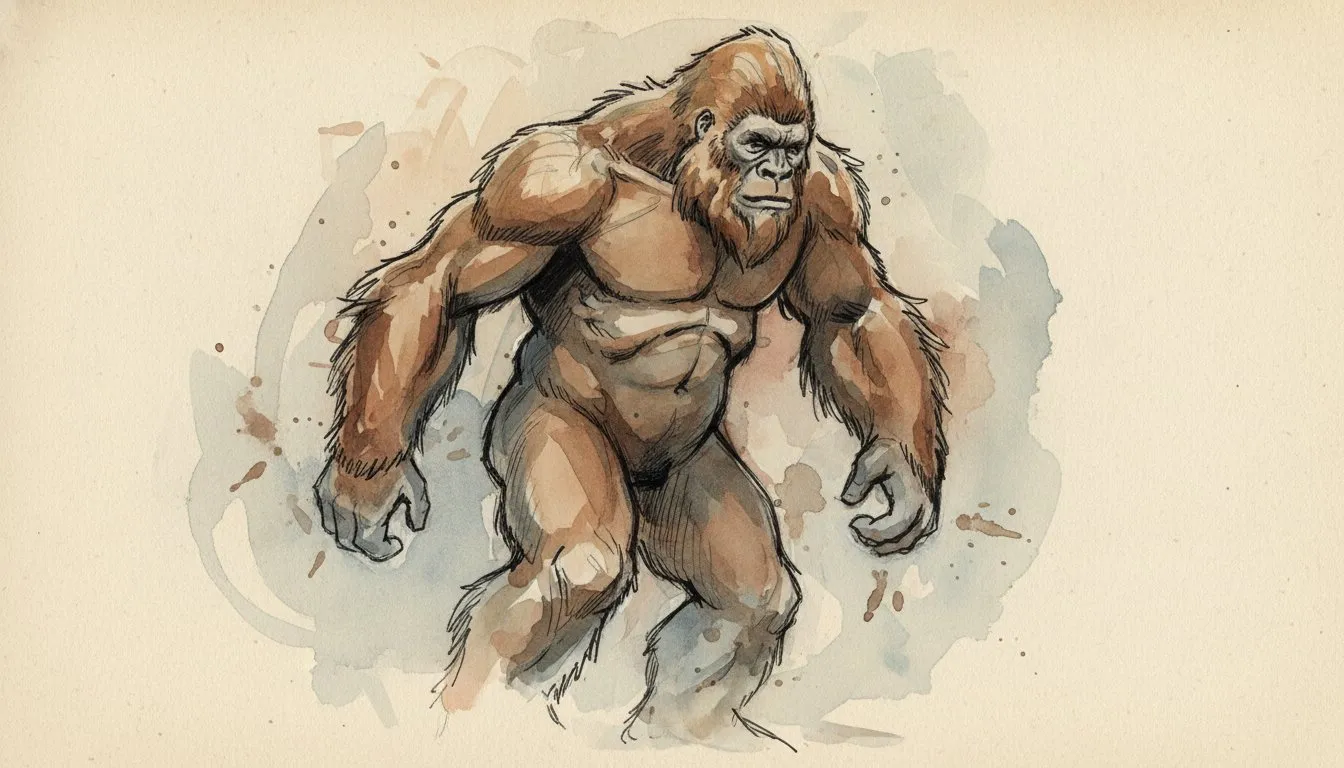
Bigfoot
The towering ape-man of the Pacific Northwest, glimpsed in fog and legend for centuries.
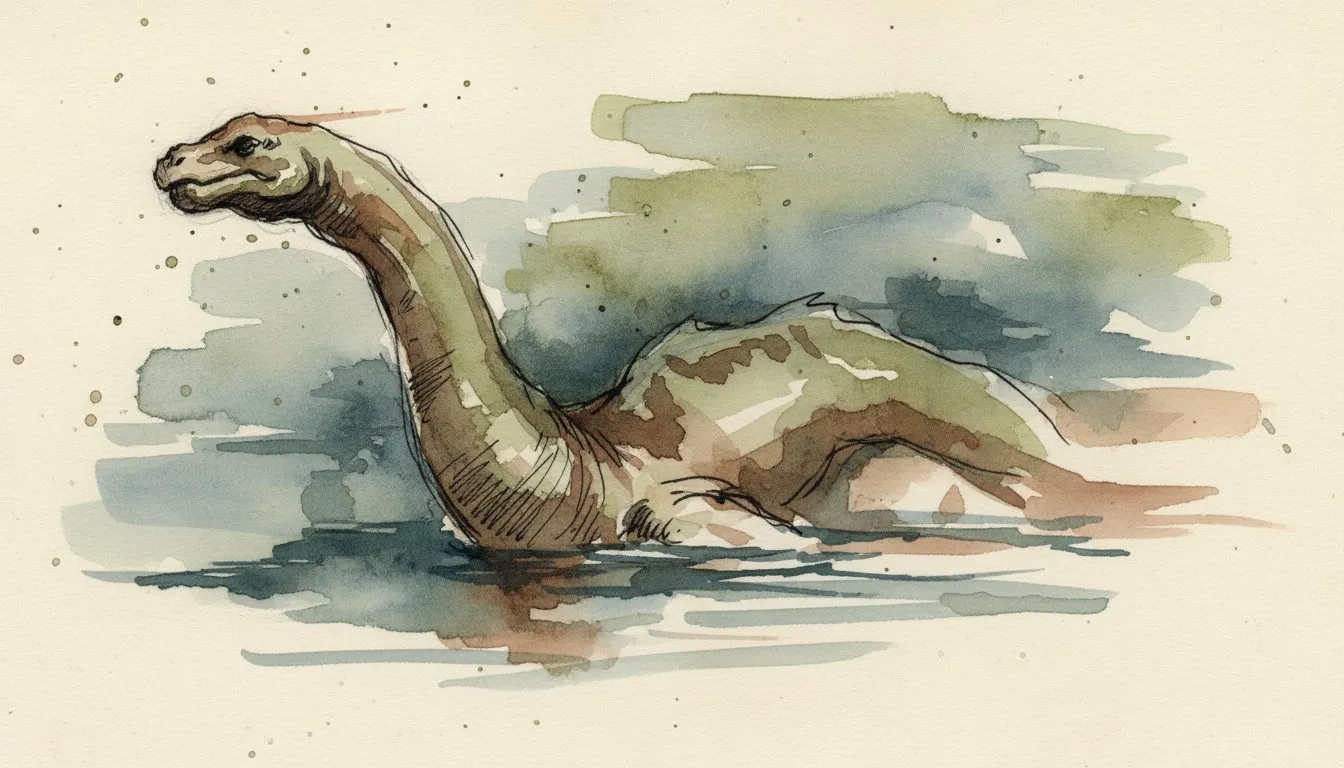
Loch Ness Monster
The legendary lake serpent of Scotland, photographed, sonar-scanned, and never found.
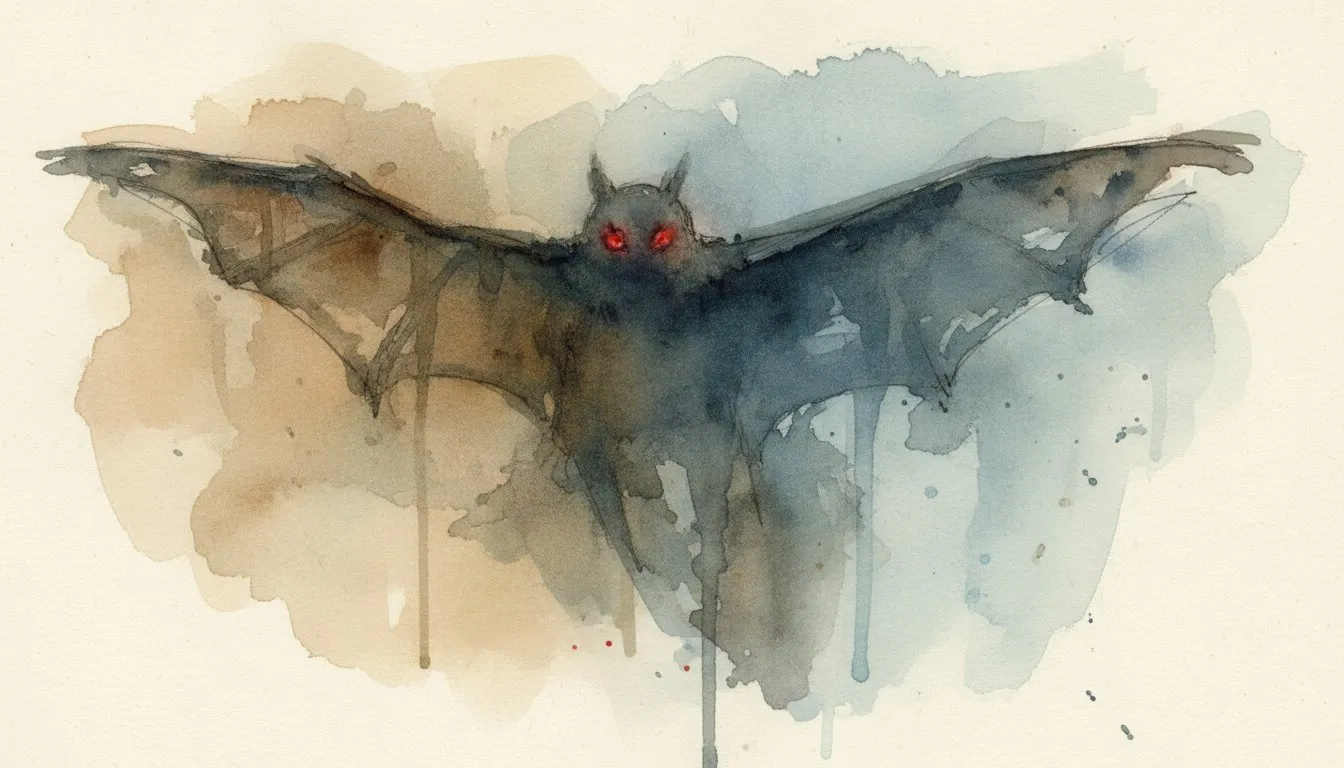
Mothman
A winged humanoid with blazing red eyes, haunting Point Pleasant before disaster struck.

Champ
America's own lake monster, surfacing in the waters between Vermont and New York.