Winged Cryptids: A Field Guide to Everything That Shouldn't Be Able to Fly
Something Overhead
Winged cryptids occupy a particular corner of the unknown. They're not hiding in deep lakes or dense forests. They're above us, silhouetted against twilight skies and caught in headlight beams on empty roads. Witnesses describe creatures that shouldn't exist. Wingspans too wide, bodies too heavy, eyes too bright. The reports span every inhabited continent, from Appalachian hollows to Indonesian river valleys to the suburbs of Chicago.
Here's your field guide. Location, estimated wingspan, behavior, and what makes each one distinct.
The Americas
### Mothman
Location: Point Pleasant, West Virginia | Wingspan: 10-15 ft
The most famous winged cryptid in the world. First reported in November 1966 near an abandoned munitions plant, described as a large gray figure with glowing red eyes that pursued a car at over 100 mph. Dozens of sightings followed over 13 months, ending abruptly after the Silver Bridge collapse killed 46 people in December 1967. Witnesses describe a headless-looking body with eyes set into the chest, massive wings, and vertical takeoff capability. The Mothman of Chicago sightings beginning in 2017, with over 100 reports of a similar winged humanoid around Lake Michigan, suggest the phenomenon didn't end in West Virginia.
### Thunderbird
Location: Throughout North America, concentrated in Pennsylvania and the Great Plains | Wingspan: 15-25 ft
Thunderbird reports predate European colonization by centuries. Indigenous traditions describe enormous birds capable of creating thunder with their wingbeats. Modern sightings describe a dark bird far exceeding any known species. A famous 1890 Arizona report described cowboys shooting a pterodactyl-like creature, though the supposed photograph has never been verified. Pennsylvania's sighting density is particularly high, with clusters in the 1940s and 2001.
### Jersey Devil
Location: Pine Barrens, New Jersey | Wingspan: 4-6 ft
One of America's oldest cryptids, dating to 1735. Bat-like wings, hooves, a forked tail, and a piercing scream. Unlike most winged cryptids, the Jersey Devil is small and lean. A major flap in January 1909 produced sightings across 30 towns in one week. Schools closed. Workers refused to leave their homes.
### Batsquatch
Location: Mount St. Helens, Washington | Wingspan: 15-20 ft
First reported in 1994. A large, purple-skinned, bat-winged primate with yellow eyes, spotted near an active volcano. The primate-like face distinguishes it from Mothman. Sightings are rare but vivid, and the volcanic connection adds a geological dimension most winged cryptids lack.
### Piasa Bird
Location: Alton, Illinois | Wingspan: Unknown, depicted as large
French explorers documented a mural of this creature on Mississippi River bluffs in 1673. A dragon-like figure with antlers, a long tail, and a face blending human and animal features. Illini tradition described it as a man-eating predator. The Piasa Bird is unusual because its primary evidence is artistic, but modern sightings of large flying creatures along the Mississippi corridor continue.
### Snallygaster
Location: Frederick County, Maryland | Wingspan: 20-25 ft
Reported since the 1700s by German settlers. Half-reptile, half-bird, with a metallic beak and octopus-like tentacles. Early accounts called it "Schnelle Geister" (quick ghost). A 1909 flap allegedly prompted the Smithsonian to offer a reward for its capture. The anatomy is the strangest of any winged cryptid, combining avian, reptilian, and cephalopod features.
Location: Van Meter, Iowa | Wingspan: 8-10 ft
In October 1903, a doctor, a banker, and a hardware store owner independently reported a winged creature with a glowing horn on its forehead. It appeared three consecutive nights and was shot at without effect. On the final night, a second creature arrived, and both vanished into an abandoned coal mine. Newspaper accounts from 1903 survive.
Africa, Asia, and the Pacific
### Kongamato
Location: Jiundu swamps, Zambia | Wingspan: 4-7 ft
"Breaker of boats" in the Kaonde language. A large, reddish, featherless flying creature with a toothed beak. When shown illustrations of pterosaurs, local witnesses consistently identify them as what they've seen. Explorer Frank Melland documented reports in 1923. The remote swamp habitat could theoretically shelter undiscovered species.
### Ahool
Location: Deep rainforests of Java, Indonesia | Wingspan: 10-12 ft
Named for its call, a drawn-out "ahooool" over river valleys at night. Described as a giant bat with a monkey-like face and dark gray fur. Naturalist Ivan T. Sanderson reported one swooping over his head in 1925. Java's dense, under-explored rainforests remain plausible habitat for an undiscovered large bat.
### Ropen
Location: Umboi Island, Papua New Guinea | Wingspan: 15-20 ft
A nocturnal flyer with bioluminescent skin, a long tail ending in a diamond-shaped flange, and a head crest. Locals describe it as a real animal that feeds on fish. The bioluminescence is unique among winged cryptids. Its anatomy aligns more closely with a rhamphorhynchoid pterosaur than any known bird or bat.
Europe
### Owlman
Location: Mawnan, Cornwall, England | Wingspan: 6-8 ft
First reported in 1976 hovering above Mawnan church tower. A humanoid with large wings, pointed ears, and glowing red eyes. Sometimes called "Cornwall's Mothman," but the owl-like features and its fixation on a single church set it apart. Sightings continued sporadically into the 1990s.
Patterns in the Sky
Glowing eyes appear across nearly every tradition, from Mothman's red gaze to the Van Meter Visitor's luminous horn. Pterosaur-like anatomy repeats in tropical regions where dense wilderness could shelter relic populations. Temperate sightings lean toward bat-winged humanoids or impossibly large birds.
Most winged cryptids are nocturnal. Most are silent in flight. And most provoke the same response in witnesses. Not just fear, but wrongness. Something that large should not be airborne. Something that shape should not exist.
The reports keep coming. From the Mississippi bluffs to the river valleys of Java. From a small Iowa town in 1903 to a Chicago suburb last year. Whatever is up there, it hasn't stopped flying.
Explore more: Browse all cryptids, Mothman, Thunderbird, Jersey Devil, Batsquatch.
Creatures mentioned in this post
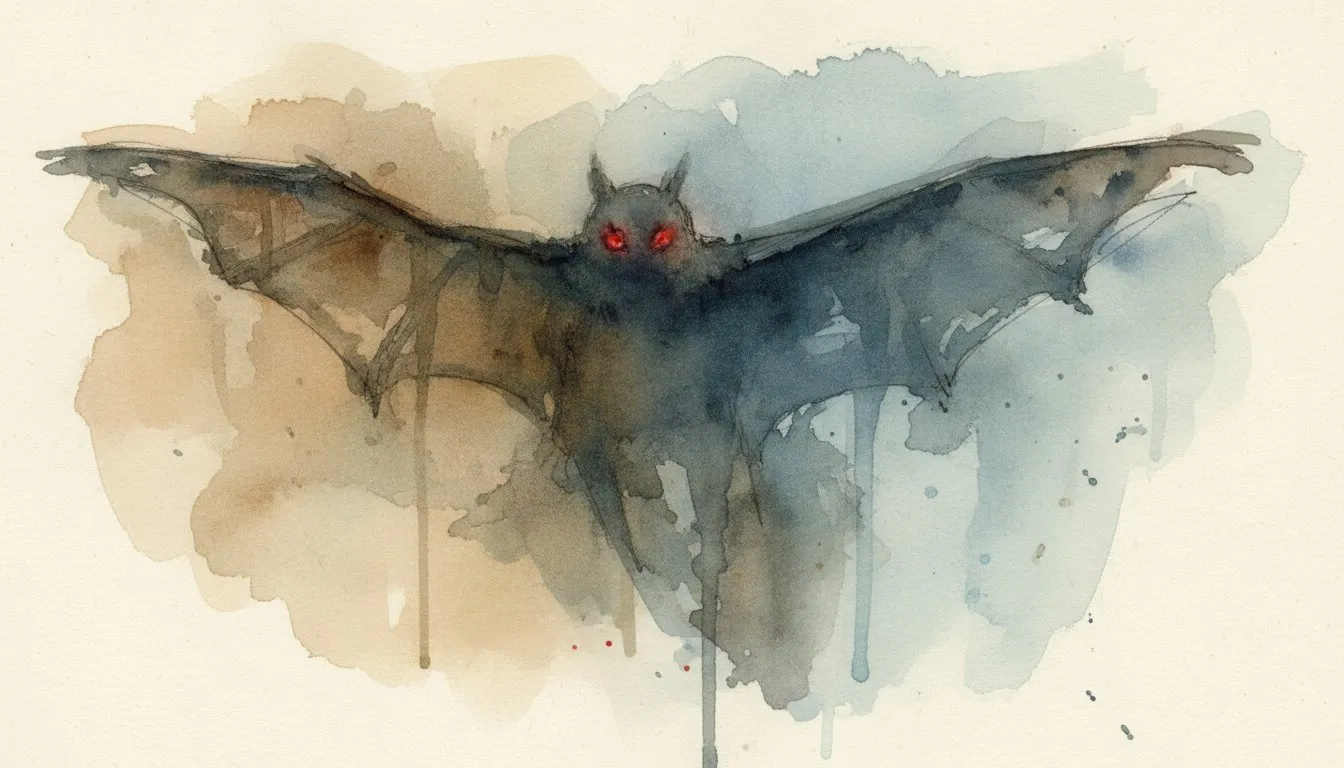
Mothman
UnknownA winged humanoid with blazing red eyes, haunting Point Pleasant before disaster struck.
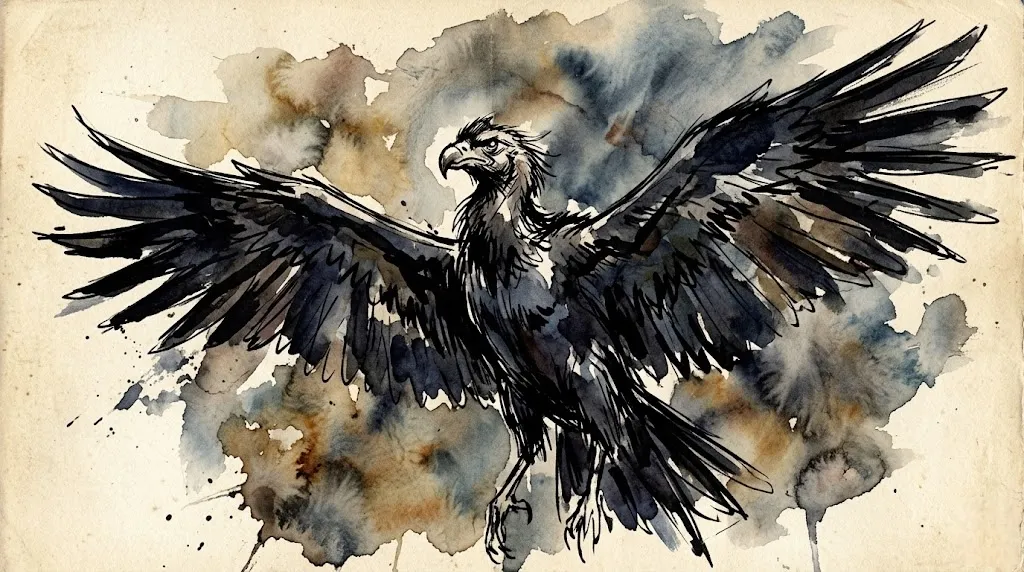
Thunderbird
HighA colossal bird from indigenous legend with a wingspan that blots out the sun.
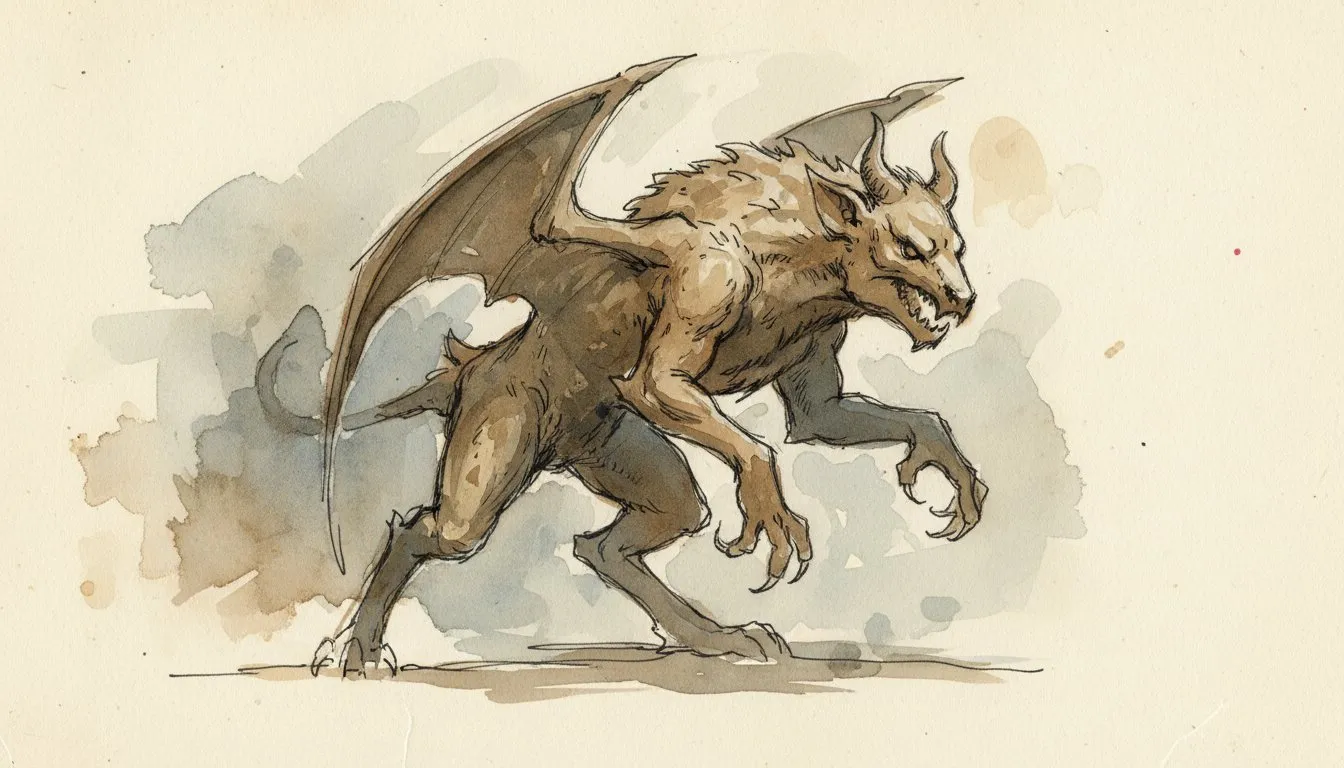
Jersey Devil
MediumA bat-winged, hoofed terror born from a colonial curse in the Pine Barrens.
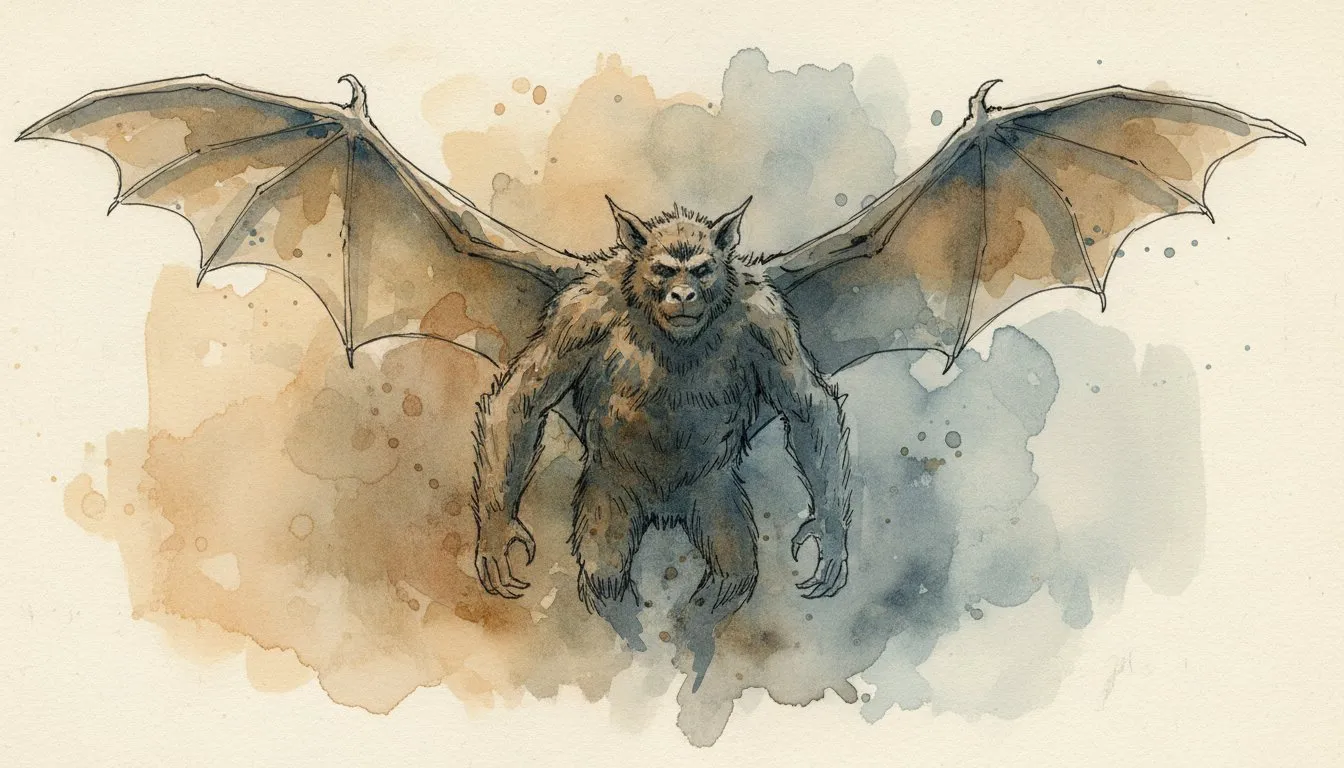
Batsquatch
UnknownA purple-skinned, bat-winged ape seen near Mount St. Helens after the eruption.